Business case study questions: where to find them and how to answer

Your fastest route to real South African Business Studies case‑study questions is the Department of Basic Education exam papers, IEB papers if you’re at an independent school, and Papersza, which hosts both alongside their marking memos in one searchable library. Do this now: download a recent Grade 12 Business Studies paper and its memo from Papersza’s Grade 12 Business Studies library, set a timer, and attempt a Section B case study under real exam conditions.
Two things happen when you do this today instead of “sometime this week”:
- You find out immediately whether your problem is content knowledge or exam technique.
- You get a memo to mark against, so you’re not guessing whether your answer would have scored.
Grade 11 learners building a foundation should start with the Grade 11 Business Studies papers instead, since Grade 12 papers assume content not yet covered. Either way, the official DBE and IEB documents explain how the exam is structured before you write a single word.
Key Takeaways
Matching your answer’s depth to the action verb and mark allocation, using real past papers and memos for self-marking, is what actually moves Business Studies marks upward.
| Point | Details |
|---|---|
| Get official past papers | Download DBE, IEB, or Papersza papers with memos to practise under real exam conditions. |
| Underline the action verb first | “Discuss,” “evaluate,” and “advise” each demand a different structure and depth of answer. |
| Let marks dictate depth | A 4-mark question needs roughly four distinct, developed points, not one long paragraph. |
| Link facts to explanations | Memos often split one mark for a fact and a second for its linked explanation. |
| Add a current SA example | Section C essays reward synthesis using recent, relevant local examples or legislation. |
| Practise on Papersza | Use Papersza’s free, memo-paired Grade 11 and Grade 12 Business Studies library for timed practice. |
Table of Contents
- How to answer business case study questions step by step
- Why examiners reward this approach in NSC assessments
- Practise business case study questions on Papersza
- Where to find official guidance and more past papers
- Sources
- FAQ
How to answer business case study questions step by step
Marks in Business Studies case studies aren’t awarded for writing more. They’re awarded for matching what the action verb demands, at the depth the mark allocation tells you to go. Get that mismatch wrong and you can write a full page and still lose half the marks.
Here’s the routine DBE’s own guidance recommends, and it works whether you’re answering a Section B paragraph question or a Section C essay:
- Scan first. Look at the heading, any picture, and the business name before reading a word of the scenario. This tells you the topic (entrepreneurship, marketing, or operations, for instance) before you get lost in detail.
- Read slowly, once. Don’t skim. The scenario contains the specific facts you’ll need to apply theory to, not just background colour.
- Underline every action verb. “Discuss” wants explanation and development. “Evaluate” wants balanced analysis ending in a judgement. “Advise” or “recommend” wants a concrete suggestion with a reason attached. “Suggest” is often shorter and less formal than “recommend.”
- Quote only when the question says to. Copying scenario text when it isn’t asked for wastes time and earns nothing.
- Check the mark allocation before you write. A 4-mark question needs roughly four distinct points, not four sentences saying the same thing differently.
- Write in focused paragraphs, one idea per paragraph, theory linked directly to something in the scenario.
Marking memos back this up directly: the DBE’s NSC marking guideline shows that a fact can be worth one mark and its linked explanation a second, separate mark. Miss the link and you keep only half the marks available.
Time management follows the same logic. A rough split that works for a two-hour paper: spend the first 10 minutes reading and choosing questions, then allocate roughly one minute per mark for planning and writing, leaving five minutes at the end to check that you’ve addressed every verb. Section B answers stay in paragraph form and move fast. Section C essays need an introduction, developed body paragraphs, and a conclusion; therefore, budget more planning time there.
Take a 6-mark question asking you to discuss a business’s response to a legislative change. A strong answer needs roughly three points, each built the same way: a fact drawn from the scenario, then an explanation of why it matters, then (where the verb calls for it) a judgement. Two marks per point, three points, six marks. That’s the whole structure.
Pro Tip: *In Section C essays, examiners reward synthesis, not just content recall.
Why examiners reward this approach in NSC assessments
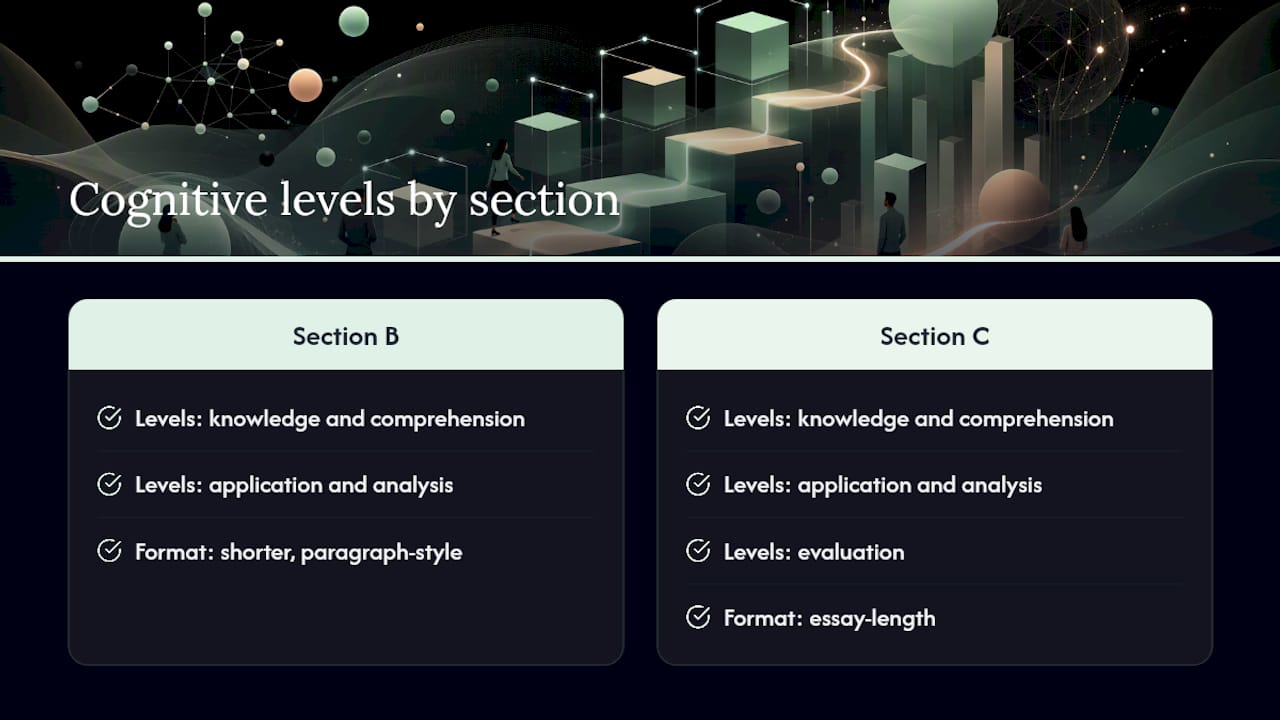
DBE and IEB case studies test three cognitive levels: knowledge and comprehension, application and analysis, and evaluation. Section B questions are shorter and paragraph‑style; Section C is essay‑length and demands more synthesis. The routine above works because it forces you through all three levels in order, rather than jumping straight to opinion before you’ve shown you understand the facts.
The IEB confirms its exams are built on CAPS, so this method applies whether you’re writing an NSC paper through DBE or an IEB paper at an independent school. The Business Studies FET CAPS document itself ties assessment directly to real business themes and South African legislation, which is exactly why generic textbook answers underperform.
Examiners consistently flag the same weaknesses: answers that describe rather than apply, answers that ignore what the verb is actually asking for, and answers that never connect back to the specific business in the scenario. Fix those three habits and your marks move noticeably.
Practise business case study questions on Papersza
Once you know the routine, the bottleneck becomes practice material. Papersza gives you fast, free access to South Africa’s largest independent library of past papers and memos, so you’re never stuck hunting for a recent Business Studies exam to run through the process above.
What you get on the Business Studies Grade 12 page:
- A searchable library organised by grade, year, and exam session, so you can find a specific paper in seconds.
- Free downloads with no account or registration needed.
- Memos paired with every paper for honest self-marking, not guesswork about whether your answer was strong enough.
- Recent years prioritised, which matters because question phrasing shifts even when the underlying CAPS topics stay the same.
If you want to see exactly how the download and memo pairing works before you commit time to it, Papersza’s how‑it‑works page walks through the process. Otherwise, skip straight to the point: open the Grade 12 Business Studies library, pull one recent paper and memo, and run the timed Section B practice from the routine above tonight.
Where to find official guidance and more past papers
Three sources cover almost everything you’ll need. Use the DBE’s Business Studies FET CAPS document to confirm curriculum weightings and prioritise which topics deserve more revision time. Use IEB’s NSC subject assessment guidelines if you’re writing an IEB paper, since it details school-based assessment requirements that mirror DBE’s approach.
For volume, Papersza’s full past papers directory covers every subject and grade, useful if you’re also revising Economics or another subject alongside Business Studies.
- DBE documents: best for confirming official marking rules and cognitive-level breakdowns.
- IEB guidelines: essential if you attend an independent school writing IEB papers.
- Papersza: fastest route to bulk past papers and memos for repeated timed practice.
When the rules conflict with what a study guide claims, trust the official DBE or IEB document first.
Sources
- Department of Basic Education — Case study and question‑response guidance
- IEB subject assessment guidelines (Business Studies / NSC)
FAQ
What’s the difference between Section B and Section C case studies?
Section B answers are shorter, paragraph-style responses, while Section C requires longer, essay-style answers with an introduction, developed argument, and conclusion.
How many facts should I include per mark?
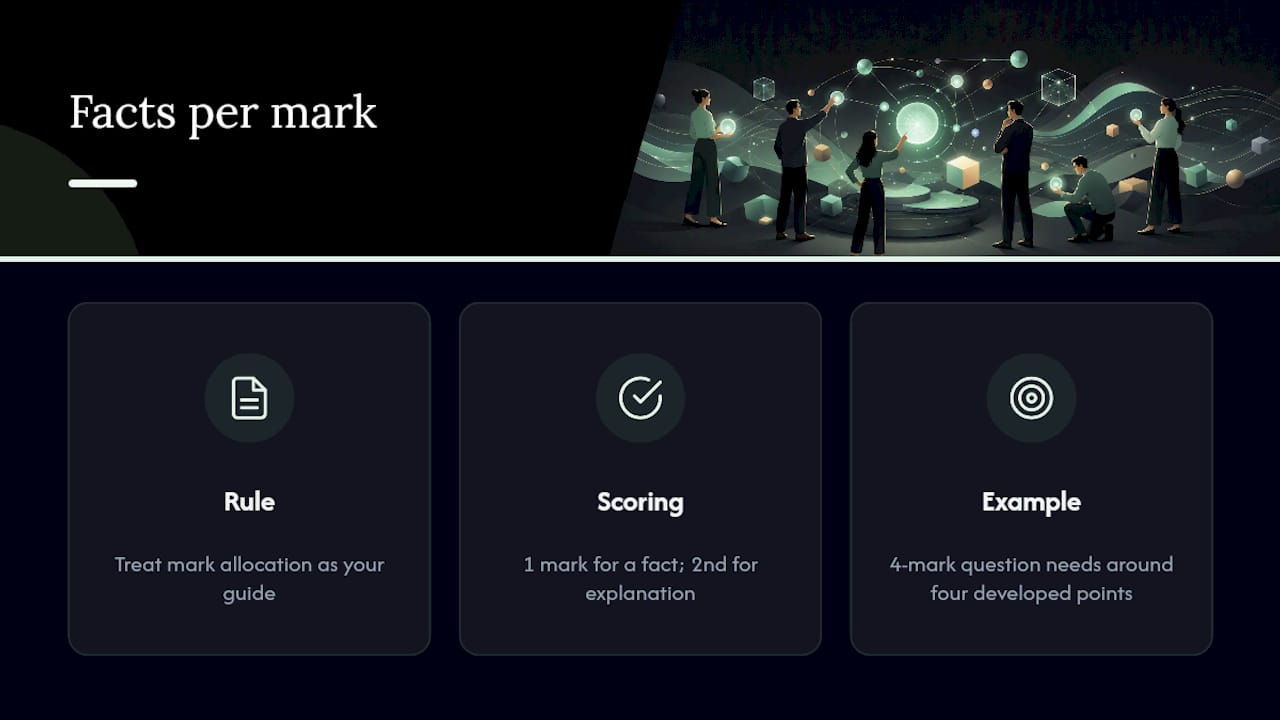
Treat mark allocation as your guide. A memo may award one mark for a fact and a second for the linked explanation, so a 4-mark question generally needs around four distinct, developed points.
What does “evaluate” actually require in a Business Studies answer?
“Evaluate” expects balanced analysis of both sides of an issue followed by a clear, justified judgement, not just a description of the scenario.
Which past paper years should I prioritise for practice?
Prioritise the most recent years available, since question phrasing and action verbs shift over time even though the underlying CAPS topics remain largely unchanged.