English Paper 2 literature past papers: where to download and how to revise

Start here: download official English Paper 2 past papers and memos from the Department of Basic Education, the Western Cape Education Department ePortal, or PapersZA, which pulls DBE, IEB, and provincial papers into one searchable archive with no login required. Before you open a single PDF, lock in two numbers: the National Senior Certificate English Home Language Paper 2 typically carries a total mark allocation and a time allowance visible on the cover page of every official paper, both visible on the cover page of every official paper.
Those two facts should shape every practice session between now and the exam. If you’re not timing yourself against 150 minutes, you’re not really practising Paper 2, you’re just reading literature notes.
- DBE PDFs — the primary source, session labelled (May/June, October/November, supplementary), always paired with a marking memo.
- WCED ePortal — mirrors national papers and adds provincial navigation tools for Western Cape learners.
- PapersZA — a free, account-free archive organised by subject, grade, year, and session, built specifically so you don’t have to dig through departmental site menus to find one file.
Pro Tip: Download the memo at the same time as the question paper. Marking your own attempt an hour after writing it, while the questions are still fresh, teaches you far more than marking it three days later.
Key Takeaways
Passing English Paper 2 depends on timed past-paper practice matched against real marking memos, not on rereading study notes.
| Point | Details |
|---|---|
| Download from three sources | Use the DBE portal, the WCED ePortal, or Papersza’s Grade 12 English archive for free, no-account access. |
| Know the paper shape | Standard NSC Paper 2 carries 80 marks and a 2½ hour time allowance across poetry, drama, and novel sections. |
| Confirm your prescribed texts | Check your school’s subject notice against provincial lists before committing study hours to a text. |
| Mark with the memo, not your gut | Self-mark every practice essay against the official memo to see exactly where marks are lost. |
| Use Papersza for speed | Papersza organises papers by subject, grade, year, and session so you spend revision time studying, not searching. |
Table of Contents
- Where and how to download official English Paper 2 past papers
- What does English Paper 2 include?
- How do I confirm my prescribed texts and poems?
- How to use past papers effectively for revision
- Which past papers should you prioritise?
- Where to find marking memos and examiner reports
- How to answer Paper 2 exam questions under time pressure
- Your final week: checklist and day-by-day schedule
- What actually moves marks up fast
- Get every past paper and memo you need in one place
- Sources
- FAQ
Where and how to download official English Paper 2 past papers
Every province publishes the same national exam, so the safest bet is to go straight to the source before trying a shortcut. Here’s the actual workflow.
- Go to the DBE examination papers portal. The Department of Basic Education hosts NSC papers by year and subject. English Home Language Paper 2 files follow a predictable naming pattern, something like “English Home Language P2” plus the year and session, as seen in the 2023 paper.
- Match the memo to the paper. Memos are published separately but labelled with the same year and session. Open both PDFs side by side before you start writing.
- Check the WCED ePortal for a second route. The Western Cape Education Department mirrors national papers and sometimes offers filtering by session that speeds up the hunt, useful if the DBE site is slow or a specific file has moved.
Confirming authenticity takes seconds. Real official files carry the session label clearly (May/June, October/November, or supplementary), the correct subject and paper number in the filename, and a memo that references identical question numbers. If a file has none of that, or the memo doesn’t match, skip it.
Once you’ve got a batch of papers, organise them before you start revising rather than after. Create folders by year and session, and keep memos in the same folder as their matching question paper. That single habit saves you from the single most common time waster in exam prep: hunting for the right memo mid practice session when you should be writing.
- Check the paper’s session label matches its memo.
- Save papers in year order so you can track how question style shifts.
- Keep at least three recent years (2023 to 2025) plus one older paper for contrast.
Pro Tip: Batch download five papers in one sitting and schedule them across your calendar before you start studying content. Deciding “what to practise next” in the moment wastes more revision time than most students realise.
What does English Paper 2 include?
Paper 2 tests your ability to analyse literature, not recall plot. That distinction drives everything else about how you should prepare.
The paper is typically split into two broad sections. Section A covers poetry, usually a mix of a prescribed poem and one or two unseen poems, testing close reading and your ability to connect poetic devices to meaning. Section B covers your prescribed drama and novel, structured around contextual questions (short, text-based responses) and an essay question requiring sustained literary argument.
Official DBE papers state the mark allocation and time allowance directly on the cover: 80 marks total, 2½ hours, though always confirm against your specific year’s paper since minor adjustments do happen. That works out to roughly one minute per mark if you want time left over for reading and checking your essay plan.
Marks aren’t handed out for enthusiasm. Examiners are trained to look for specific things:
- Knowledge and understanding — do you know what happens in the text and why it matters.
- Analysis and interpretation — can you explain how a technique creates meaning, not just name it.
- Contextual awareness — do you connect the text to its themes, setting, or the era it was written in.
- Language and structure — is your essay coherent, and do you use appropriate literary register.
Command words change what an examiner expects from your answer. “Discuss” wants an argument with evidence on both sides. “Analyse” wants you to break a passage or technique into its parts and explain the effect. “Compare” wants explicit links between two things, not two separate paragraphs that never touch. “Evaluate” wants a judgement, backed by reasoning, not just description. Misreading a command word is one of the fastest ways to lose marks on an otherwise well written answer.
How do I confirm my prescribed texts and poems?
Prescribed literature lists change, and not every school teaches the same poems even within the same province. Confirming your exact list is non negotiable before you start deep revision.
Start with your school’s subject notice or your teacher’s own list, since that’s the version that maps to what you’ll actually sit in the exam. Cross check it against provincial subject circulars where available, and against the DBE’s own examination guideline documents for English Home Language. If anything looks inconsistent, especially around which poems are “prescribed” (compulsory, guaranteed to appear) versus “selected” (a wider pool your teacher chose from), ask your subject head directly rather than guessing.
A quick checklist before you commit study hours to a text:
- Confirm the exact title and edition of your novel or play (some schools use abridged or older editions).
- Separate prescribed poems from a wider anthology your teacher may have added for practice.
- Note any syllabus updates for the current year that might drop or swap a poem.
Pro Tip: Build one master document with each prescribed text, three to five key quotations per chapter or act, and a one-line note on why each quotation matters. You’ll use this single page more than any other revision material you make.
How to use past papers effectively for revision
Past papers only work if you treat them as diagnostic tools, not comfort reading. The difference between a student who improves fast and one who plateaus usually comes down to whether they mark their own work honestly against a memo.
Here’s a repeatable cycle that works across poetry, drama, and novel sections:
- Pick one past paper, ideally one you haven’t seen, and set a timer for the full 2½ hours or a proportional slice if you’re only practising one section.
- Write under exam conditions. No notes, no phone, same pen you’ll use in the real exam if that helps you settle into rhythm.
- Mark your own answer against the memo. Don’t skim it. Match memo descriptors to your actual sentences, question by question.
- Read the examiner report or model answer where available, and note the specific phrase or technique that separated a full-mark response from a partial one.
- Reattempt only the weak sections, not the whole paper again. If your poetry analysis was thin but your essay was strong, spend your next session entirely on poetry.
Memos reward specific things: a clearly stated point, textual evidence, and an explanation of effect. A common mistake is writing “the poet uses imagery” and stopping there. Memos almost always want the next sentence too, what the imagery does and why it matters to the poem’s meaning. Structured revision guidance consistently points to this kind of active, memo-checked practice as more effective than passive rereading of notes.
Before each session, check you have: the timer set correctly, the matching memo printed or open, a different coloured pen for corrections, and a notebook for recurring mistakes.
Pro Tip: Keep a single practice log, one line per session: date, paper used, weakest section, and one quotation you got wrong. After four or five sessions, patterns jump out that you’d never notice otherwise.
Which past papers should you prioritise?
Not all past papers deserve equal time. Recent papers matter more because examiners adjust question style and emphasis year to year, and the most recent November finals reflect current marking trends better than a paper from five years back.
Prioritise in this order: the last two or three October/November final papers, then the most recent May/June paper if your school offers one, then a supplementary paper for extra unseen poetry practice, and only then older papers for volume.
A tight two to four week schedule might look like this:
- Week 1 — one full timed paper focused on poetry (prescribed and unseen), self-marked.
- Week 2 — one full timed paper focused on your prescribed novel, essay and contextual questions.
- Week 3 — one full timed paper on drama, plus a poetry extract redo from Week 1’s weak spots.
- Week 4 — one complete mixed paper under full exam time, simulating the real thing exactly.
Rotate text types deliberately rather than practising your favourite section repeatedly. Most students gravitate toward whichever text feels easiest, which is precisely the section that needs the least extra time.
- Recent papers (last two to three years) come first.
- Rotate across poetry, drama, novel, and unseen extracts within each week.
- Save one full mixed paper for your final week as a dress rehearsal.
Where to find marking memos and examiner reports
Memos and examiner reports live in the same places as the papers themselves. The DBE portal publishes memos as separate PDFs matched by year and session, the WCED ePortal mirrors these with occasional added navigation, and PapersZA bundles papers and memos together on the same subject page so you’re not toggling between two different sites mid session.
Spotting the right memo is simple once you know what to check: matching year, matching session (May/June versus October/November), and question numbers that correspond exactly to your paper. If a memo references a question your paper doesn’t have, you’ve grabbed the wrong file.
Examiner reports, where published, are worth more than most students realise. They list the specific mistakes candidates made nationally, things like weak integration of quotations, plot summary instead of analysis, or ignoring the command word entirely. Reading three or four of these reports before you write your own practice essay is one of the fastest ways to avoid the same traps.
- Turn memo bullet points into a personal checklist (“did I mention the poet’s tone shift in stanza two?”).
- Note recurring examiner comments across two or three years, since the same weaknesses tend to repeat.
- Use model answers to see how much detail actually earns full marks, often less than students assume.
Pro Tip: After marking a practice essay, rewrite just the weakest paragraph using the memo’s exact language as a guide. This single-paragraph rewrite habit fixes more marks than redoing an entire essay.
How to answer Paper 2 exam questions under time pressure
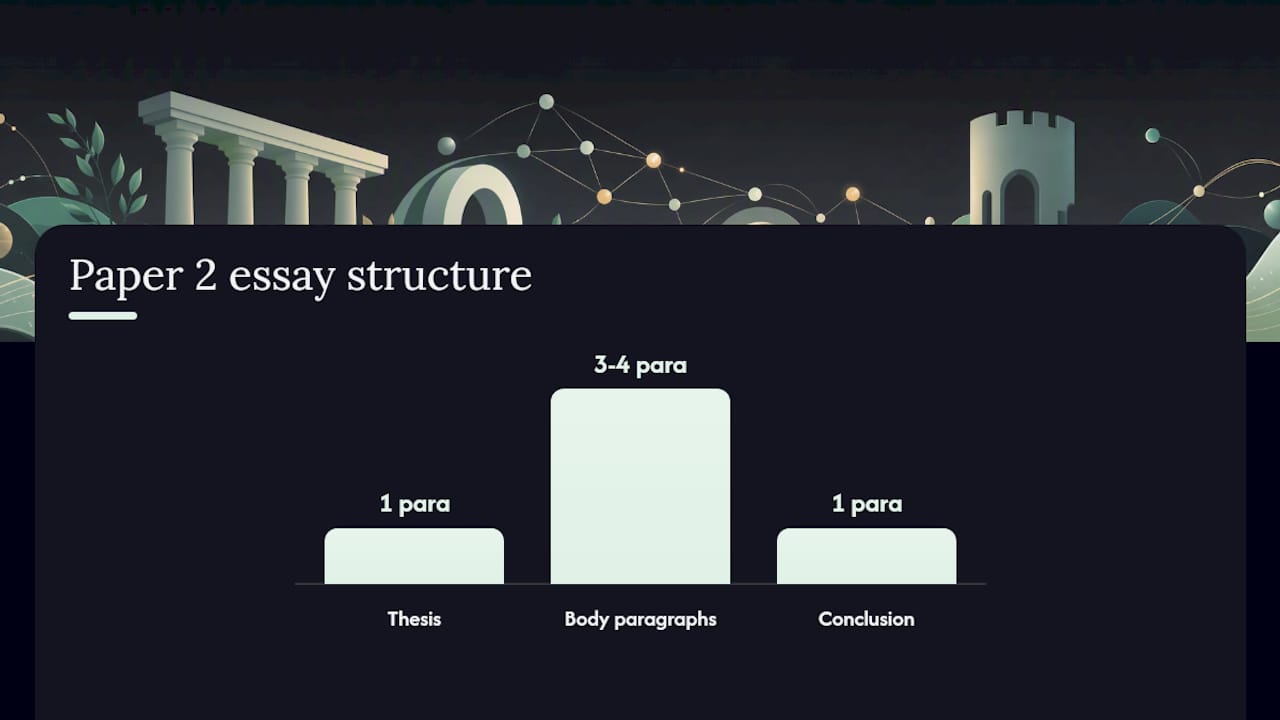
A strong Paper 2 essay follows a plan, not inspiration. Open with a concise thesis that directly answers the question, not a restatement of it. Build three to four body paragraphs, each anchored by one point, one embedded quotation, and one sentence of analysis explaining the quotation’s effect. Close with a short conclusion that ties back to the question, not a summary of the plot.
Here’s what a functioning body paragraph looks like in practice: “Gatsby’s obsession with the green light reflects his inability to separate love from status; Fitzgerald writes that Gatsby ‘stretched out his arms toward the dark water’ as though reaching for something both physical and unreachable, showing how his longing has become inseparable from illusion.” That sentence works because it states a point, embeds the quotation naturally inside the sentence rather than bolting it on, and explains the effect immediately, exactly the structure literature essay guides recommend for scoring well on analysis criteria.
For poetry, especially unseen extracts, read the poem twice before writing anything. First read for overall meaning and tone, second read to annotate specific devices, structure shifts, and word choices that support that tone. Students who annotate before answering consistently produce tighter analysis than those who start writing immediately off a first impression.
Time management separates strong papers from rushed ones:
Common mistakes cost marks in predictable ways. Plot summary instead of analysis is the single biggest one, examiners already know the story, they want your interpretation of it. Weak or unembedded quotations (“The poet says ‘the wind howled.’ This shows fear.”) lose marks compared to quotations woven into a sentence with explanation attached. Ignoring the command word, writing a “discuss” answer as pure description, caps your mark regardless of how well written the prose is.
- Fix plot summary by asking “why does this matter to the theme” after every plot sentence you write.
- Fix weak quotations by embedding them mid sentence rather than isolating them.
- Fix command word slips by underlining the verb in the question before you plan your answer.
Pro Tip: Time yourself writing just one paragraph in ten minutes during practice. Knowing your own paragraph speed lets you calculate, realistically, how many solid paragraphs you can produce in the real exam.
Your final week: checklist and day-by-day schedule
The final week isn’t for learning new material, it’s for tightening what you already know and calming your nerves.
- Day 7 — full timed mixed practice paper, self-marked against a memo.
- Day 6 — review weak sections identified from Day 7, redo one paragraph.
- Day 5 — poetry focus: reread prescribed poems, revise annotations, practise one unseen extract.
- Day 4 — drama or novel focus: revise quotations, rewrite one essay plan from memory.
- Day 3 — light review only: reread your master quotation sheet, no new content.
- Day 2 — rest-focused: brief quotation drill, early night, no full papers.
- Day 1 — pack your exam bag, sleep early, review nothing heavy.
| Exam day item | Why it matters |
|---|---|
| Watch or clock | Exam rooms don’t always have visible clocks |
| Black pens (spare) | Running out mid essay wastes minutes |
| Memorised quotation list | Reviewed morning of, not the night before |
| Sleep plan | Aim for a full night’s sleep two nights before, not just the night before |
- Confirm your exam venue and start time the day before, not the morning of.
- Pack a spare pen and your ID or exam admission letter the night before.
- Use Days 1 to 3 purely for consolidation, not for tackling unfamiliar material.
What actually moves marks up fast
The learners who improve fastest almost always share the same three habits: they practise under real timed conditions instead of untimed “revision,” they mark their own work against the actual memo instead of assuming they got it right, and they drill five or six key quotations per text until they can write them from memory without hesitation.
What surprises most students is how much time they waste on rereading notes passively. Rereading feels productive because it’s comfortable, but it rarely translates into exam marks the way one timed, memo-marked practice essay does. Peer marking helps too, swapping essays with a classmate and marking each other’s work against a memo exposes blind spots neither of you would catch marking your own writing.
Pro Tip: Ask a classmate to mark your essay against the memo without telling them which mark you expect. Their honest score, compared to your own self-assessment, usually reveals exactly where your confidence and your actual skill level don’t match.
Get every past paper and memo you need in one place
Papersza is the alternative to hunting across three different government websites for one PDF: search once by subject, grade, year, and session, and download the exact paper and memo you need without creating an account or waiting for a slow departmental server.
With over 8,315 documents spanning grades 3 to 12, including official DBE, IEB, and provincial papers, Papersza keeps its English Paper 2 section current so you’re never practising against an outdated question style. Start on the Grade 12 English past papers page tonight, download this year’s priority papers, and set your first timed practice session for tomorrow.
Sources
FAQ
What does English Paper 2 include?
Paper 2 covers literature analysis, typically split into a poetry section (prescribed and unseen poems) and a drama or novel section with contextual questions and an essay. Official papers include a total mark allocation and time allowance stated on the cover page, which generally corresponds to typical past structures.
What poems are prescribed for Grade 12 literature?
Prescribed poems vary by school and province, so confirm the exact list with your teacher or subject head rather than relying on a general list, since some schools select from a wider anthology beyond the compulsory set.
What should I study for English Paper 2?
Focus on your prescribed novel, drama, and poetry, with equal weight on close reading skills, embedded quotation use, and essay structure. Timed past-paper practice matched against memos from the DBE or Papersza sharpens all three at once.
How do I pass English Paper 2?
Practise under real exam time limits, mark your own answers against the official memo, and memorise five or six key quotations per text so you can embed them under pressure. Recent papers, from the last two or three sessions, give the most accurate sense of current examiner expectations.